

Chicken Royal has turned into a recognisable title among slot enthusiasts, yet many players are surprised to discover that it is not available as a single, uniform game. Instead, the name covers a small family of slot editions that possess a common barnyard theme but differ in their basic mathematics, feature sets, and technical delivery. These variations surfaced as developers modified the original concept for new platforms, adjusted the volatility to fit different player profiles, or authorized the core idea to partner studios. For anyone seeking the definitive Chicken Royal adventure, understanding these version differences is essential. The decision between a classic build and a modern deluxe edition can influence everything from the frequency of bonus triggers to the scale of the maximum payout, making it a practical consideration before a single spin is made.
Why Multiple Versions of Chicken Royal Appear
The presence of several Chicken Royal variants is not unusual in the slot industry. A successful game often spawns sequels, regional adaptations, or technical overhauls that keep it compatible with evolving device standards. In some cases, the original developer develops a “Deluxe” or “Gold” edition that improves the graphics and incorporates new bonus mechanics while keeping the core identity. In other instances, a different studio may obtain the rights to the theme and produce its own interpretation, leading to noticeable shifts in reel architecture and payline logic. Platform requirements also have a role: a version built for legacy Flash players will be without the mobile responsiveness of an HTML5 rebuild, compelling operators to provide distinct editions depending on the device being used.
Additionally, market-specific regulations shape version differences. A slot released for the UK market may feature a slightly different return-to-player percentage or adjusted bet limits compared to the same title offered in other jurisdictions. Some versions include mandatory reality-check timers or omit autoplay features to conform to local rules. These adjustments are not always highlighted prominently, which means a player switching from one online casino to another could be experiencing a platform Chicken Royal Great Britain variant with a meaningfully different mathematical profile. Understanding that multiple versions exist helps players avoid confusion when the gameplay or paytable details do not align with their previous experience with what they assumed was an identical game.
Visual, Sound, and Theme Changes
While the numerical variations are the most influential for a player’s bankroll, the multimedia display also diverges between Chicken Royal and can affect the general pleasure of the session. The initial release may present cartoon-style 2D graphics with https://www.cbc.ca/sports/basketball/russia-us-prisoner-swap-brittney-griner-1.6534656 simple motion effects, a bright farmyard color scheme, and a cheerful music of clucking hens and banjo tunes. This style has a certain nostalgic charm but can feel dated on current high-resolution screens, notably when stretched to fit a large desktop monitor or a retina tablet display.
A enhanced or remastered version typically enhances the visuals to fully rendered 3D symbols, seamless reel animations, and dynamic lighting effects that adjust to wins and bonus triggers. The audio layout is often reworked to include a richer musical score, voice acting for the chicken characters, and more impactful sound effects during big wins. These improvements are not merely superficial; they can affect game speed on legacy devices and use more data when playing on a mobile link. Players who prefer speed and simplicity may actually choose the leaner original version, while those who treat slots as an entertainment session will opt for the polished modern edition. Checking the file size or loading time can give a rapid indication of which kind of version is being delivered.

Payout Percentages and How They Differ
Theoretical payout percentage is one of the most consequential numbers a slot player should look at, and Chicken Royal versions do not share a uniform RTP figure. The original release may have been set at a theoretical return of 96.0%, while a following deluxe version could be tuned to 95.5% or even lower, depending on the operator’s configuration. Certain developers build their slots with an variable RTP range, allowing casino partners to select from various preset figures. This implies a player could encounter the same game title with a 94.0% return at one casino and a 96.2% return at another, solely because of the version and the operator’s commercial choice.
To choose intelligently, players should find the paytable or help file within the particular Chicken Royal version they are using. The theoretical RTP is typically displayed as a percentage near the bottom of the rules page. If the value is not shown, it is fair to conclude the version is set at a typical mid-level of roughly 95.5% to 96.0%, but this cannot be relied upon. Differences of even one percentage point compound over many spins, so confirming the exact number is a minor action that can have a meaningful long-term impact on fund management. No version is inherently best, but understanding the RTP lets a player to align the game with their own risk tolerance for theoretical loss.
Maximum Win Potential and Progressive Prize Systems
The featured maximum win figure is among the initial details many players seek, and it is not the same across Chicken Royal versions. An earlier or more restrained build may cap the win potential at 2,500 times the stake, while a later high-volatility edition could advertise a top prize of 10,000x or more. This number is usually shown in the game’s information panel or on the loading screen, but it is important to understand whether it denotes a theoretical maximum calculated over billions of simulated spins or a hard cap imposed by the game’s programming. Some versions establish a win ceiling that, once reached, ends the current bonus round immediately.
Beyond the fixed multiplier cap, certain Chicken Royal variants may contain a progressive jackpot element, either as a separate feature or as part of a connected network across multiple games. These jackpots can be triggered randomly on any spin, often with a higher chance when playing at larger bet sizes. The existence or absence of a progressive prize pool modifies the overall risk-return profile, because a portion of each wager supports the growing jackpot, marginally reducing the base-game RTP. Players particularly seeking life-changing sums should verify whether the version they are loading includes a progressive component, while those concentrated on consistent returns may choose a non-progressive build with a greater stated base return.
Reel Structures and Payout Line Systems Compared
One of the clearest differences between Chicken Royal versions centers on the reel grid and the way winning combinations are formed. The earliest edition of the slot usually employs a conventional five-reel, three-row layout with a fixed number of paylines, often set at 20 or 25. Wins are assessed from left to right on active lines, and the paytable clearly maps each symbol’s value against the selected line count. This straightforward structure suits players who prefer a classic, predictable format where every spin obeys the same line-based logic without sudden shifts in the number of ways to win.
Later versions might extend the grid to a five-by-four configuration or use an all-ways mechanic that grants payouts for matching symbols on adjacent reels regardless of position. Some updated builds even feature a variable ways-to-win engine, where the number of symbols per reel shifts on each spin, creating hundreds or thousands of possible winning paths. These layout adjustments change the rhythm of the game noticeably. A 1,024-ways version will generate more frequent small hits than a 20-line version, but the individual line values are typically lower, altering the overall sensation from line-hunting to cluster-style frequency. Players should always review the game rules screen to confirm the exact grid size and win evaluation method before betting real money.
Volatility Settings and Risk Profiles
Volatility, or dispersion, defines how a slot distributes its payouts over time, and Chicken Royal versions can sit at very different points on the risk scale. The classic build often adopts a medium volatility profile, offering a balanced mix of smaller base-game wins and occasional bonus round injections. This works well for players who want to sustain their balance through a longer session without experiencing prolonged dry spells. Regular but modest hits keep the game entertaining, and the bonus round, when it triggers, provides a significant but not extreme boost to the credit balance.
By opposite, a high-volatility edition of Chicken Royal may have been released to draw thrill-seeking players who are comfortable with longer losing streaks in trade for the possibility of a massive win. In such a version, the base game will feel empty, with dead spins taking place regularly, but the free spins or special element can produce wins that are multiples of what the lower-volatility variant ever pays. The selection between these profiles is not simply about taste; it directly affects bet levels and session planning. A player applying the same stake on a high-variance version needs a larger bankroll cushion to withstand the inevitable losses, while the medium-variance variant permits a more relaxed staking strategy.
Feature Mechanics and Free Spin Mechanics
The bonus game is usually the centerpiece of a slot, and Chicken Royal versions differentiate themselves strongly through the layout and generosity of their special features. In the standard edition, the free spins feature is typically activated by getting three or more scatter symbols, giving a fixed number of spins with a basic multiplier applied to every win. There might be no retrigger option, and the bonus plays out on the identical reels as the core game, causing the final result wholly dependent on the random symbol distribution during those free spins.
Upgraded versions often layer additional mechanics on top of this base. Persistent wilds that stay in position for the whole of the bonus, growing symbols that fill whole reels, or a progressive multiplier that climbs with each successive cascade can be present. Certain versions feature a selection mini-game ahead of the free spins start, allowing the player to choose from a set of eggs or buckets of feed to uncover additional spins or bigger multipliers. A feature purchase option may also be present in certain jurisdictions, allowing players pay a predetermined multiple of their bet to jump directly into the bonus. These additions basically transform the bonus experience, so a user who has only tried one version should not think the bonus structure is uniform across every Chicken Royal release.
Wager Options and Stake Flexibility
The range of allowed bets is another area where Chicken Royal variants diverge, and this has practical implications for both recreational gamblers and high rollers. A basic edition might provide a minimum bet of £0.10 per spin and a maximum of £50, which covers the requirements of most recreational players but excludes those who prefer to play at very low micro-stakes or at significantly higher levels. The coin value and bet level changes are usually presented through a simple plus-and-minus control, but the underlying restrictions are hard-coded into the game’s programming file and cannot be altered by the player.
A premium or high-limit edition may increase the ceiling to £100, £200, or even more per spin, while simultaneously keeping the minimum at £0.20 or above. This adjustment in betting range often coincides with a different RTP or volatility setting, because operators who appeal to high-stakes players sometimes ask for a version with a more aggressive mathematical model. For players using a bonus buy option, the stake range becomes even more critical, since the cost to acquire the bonus is typically displayed as a ratio of the current total bet. A version with a higher maximum bet therefore allows for a much larger absolute buy-in amount, which can dramatically accelerate both potential wins and losses.
Methods to Identify the Exact Edition You’re Enjoying
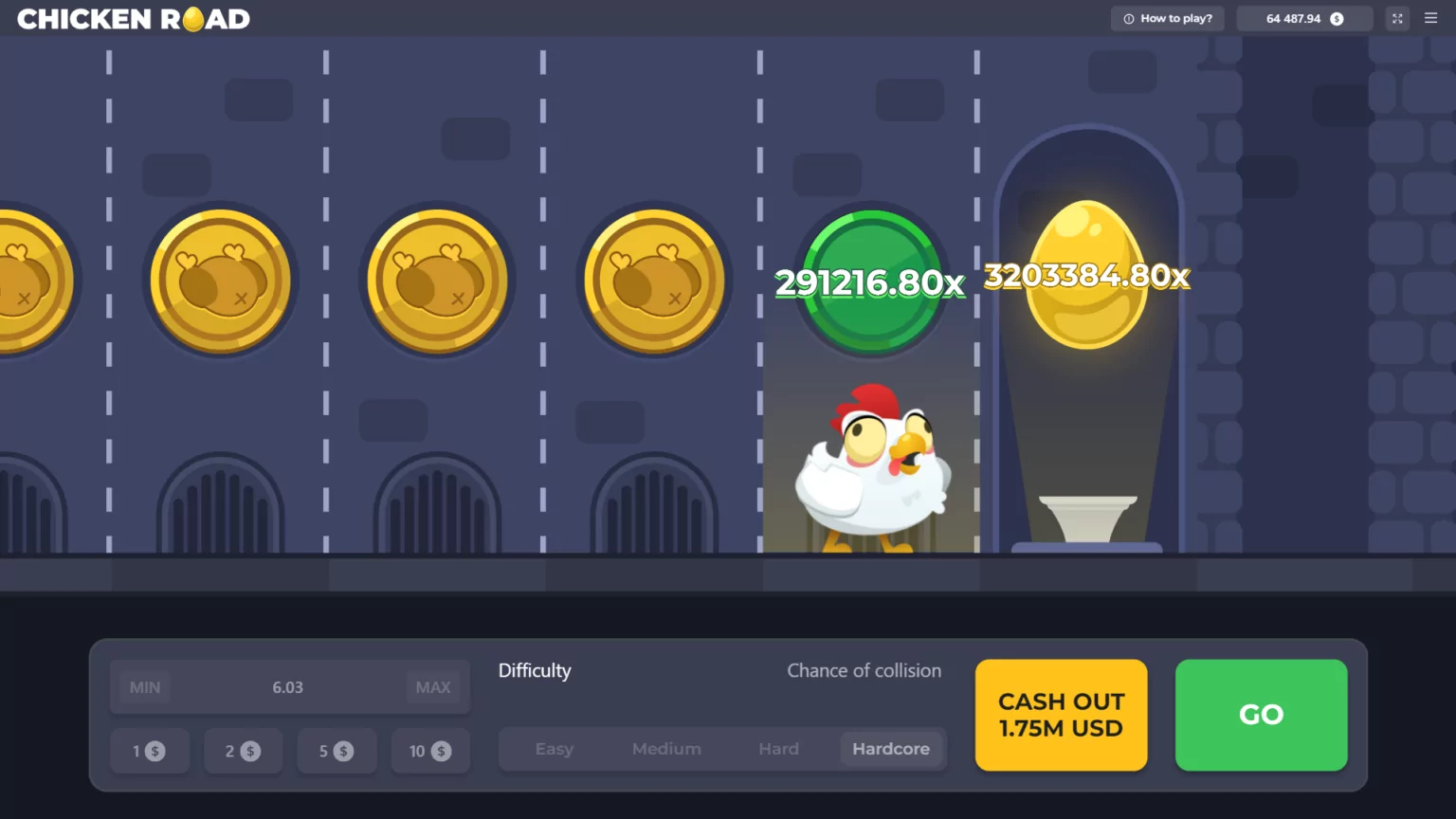
Given the meaningful variations outlined above, a savvy player will seek to confirm which Chicken Royal variant they are about to play before adding funds. The surest method is to open the game’s information or paytable screen, usually accessed via a small “i” icon or a menu button on the primary interface. This screen should show the full game name, sometimes including a subtitle like “Deluxe,” “Gold,” or “Classic,” along with the provider’s logo. The reel layout, number of paylines or ways, RTP percentage, and volatility rating are normally shown here as well. If the information screen does not indicate the RTP, the game may be utilizing an adjustable build, and the specific value can in some cases be found in the casino’s game rules section rather than inside the slot itself.
A further practical step is to run the game in demo mode, which most UK-licensed casino sites provide without requiring a deposit. Running 50 to 100 spins in demo mode reveals the volatility feel and the frequency of bonus triggers far more accurately than any written description. Pay attention to how often scatter symbols land and whether the bonus round includes the extra features described in the paytable. Comparing the demo experience across different casinos can expose version differences that are not immediately obvious from the title screen. Finally, note the game’s loading screen and file size; a lightweight 20 MB build is likely the older version, while a 60 MB or larger download suggests the enhanced edition with richer graphics and more complex feature code. These small checks take only a minute but can prevent the frustration of playing a version that does not match expectations.
Chicken Royal is not a single game but a compact cluster of slot variants that share a theme while differing in the details that matter most: reel structures, RTP, volatility, bonus mechanics, bet limits, and maximum payouts. A player who spins the classic edition and then tries the deluxe version without changing their approach may find the experience jarring, not because one is fundamentally better, but because they are designed for different playing styles and bankroll strategies. The smart approach is to treat each version as a distinct slot and to spend a few minutes examining the paytable, trying the demo, and validating the mathematical settings before committing real money. By doing so, players can align the right Chicken Royal build to their personal preferences and avoid the disappointment of unknowingly playing a variant that does not fit their goals.